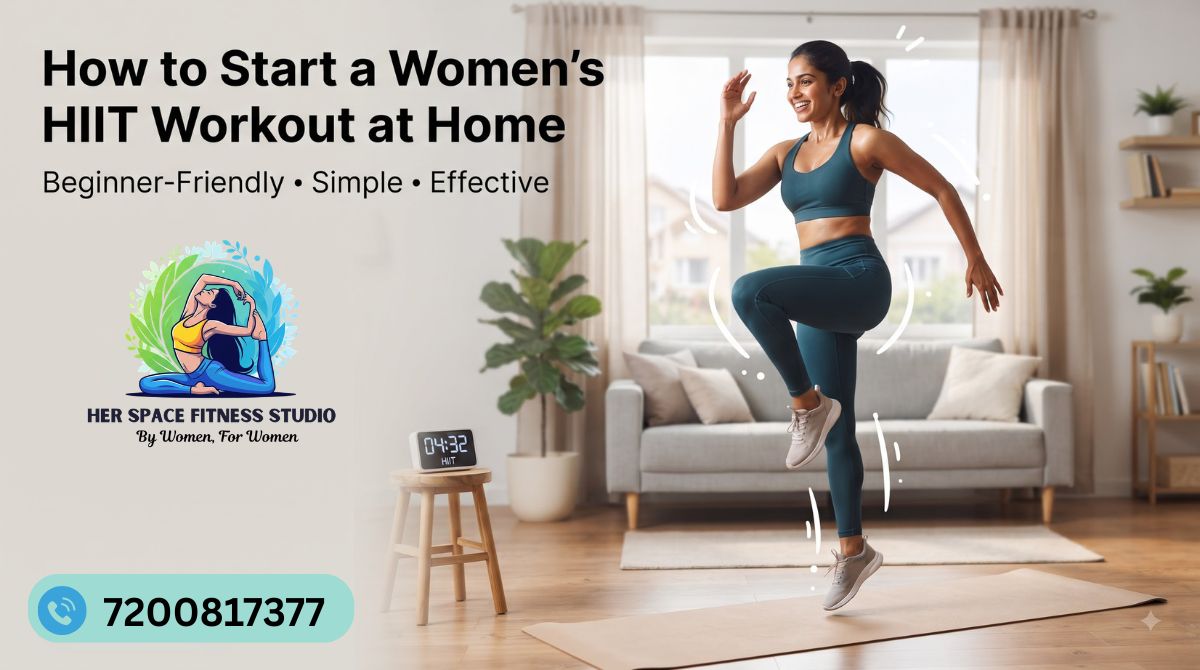
Introduction
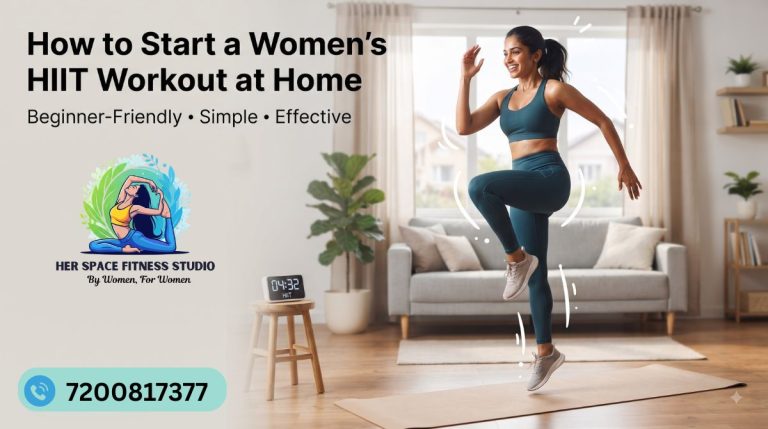
High-Intensity Interval Training, commonly known as HIIT, is a workout style that alternates between periods of challenging exercise and short recovery periods. It has become popular among women because it can provide an efficient workout without requiring long hours at the gym.
The good news is that you don’t need expensive equipment to start. A small amount of space and a well-planned routine can be enough for a beginner-friendly home HIIT workout.
However, HIIT should be approached gradually. High intensity doesn’t mean pushing yourself as hard as possible from the first session. The right workout should match your current fitness level and allow you to maintain good exercise technique.
This guide explains how to start a women’s HIIT workout at home, including beginner exercises, workout structure, safety tips, and ways to progress.
What Is HIIT?
HIIT (High-Intensity Interval Training) is a workout method that alternates between short periods of high-intensity exercise and brief periods of rest or low-intensity recovery. It helps improve cardiovascular fitness, build strength, burn calories, and support overall fitness in a shorter workout time.
For example:
30 seconds: Exercise
30 seconds: Rest or gentle movement
This pattern can be repeated for several exercises.
HIIT workouts can include bodyweight movements such as:
- Squats
- Marching
- Step-back lunges
- Mountain climbers
- High knees
- Jumping jacks
- Push-ups
- Glute bridges
You can also make HIIT workouts low-impact by removing jumping movements and choosing controlled alternatives.
Benefits of HIIT for Women
A well-designed HIIT routine can provide several fitness benefits.
1. Time-Efficient Workouts
HIIT can be completed in a relatively short period, making it useful for women with busy schedules.
2. Supports Cardiovascular Fitness
Alternating between exercise and recovery can challenge your cardiovascular system and help improve fitness over time.
3. Can Support Fat-Loss Goals
HIIT increases physical activity and energy expenditure. When combined with appropriate nutrition and overall lifestyle habits, it can support healthy body-composition goals.
4. Improves Muscular Endurance
Bodyweight HIIT exercises can challenge your legs, core, shoulders, and other muscle groups.
5. Requires Minimal Space
Many HIIT workouts can be performed in a small area at home.
6. Easy to Modify
Exercises can be made easier or more challenging depending on your fitness level.
How to Start a Women’s HIIT Workout at Home
If you’re new to HIIT, don’t begin with an advanced workout. Women’s HIIT Workout at Home.
Start with simple exercises and shorter intervals.
Step 1: Choose a Suitable Workout Space
Select a clear area where you can move comfortably.
Make sure:
- The floor is stable.
- There are no objects you could trip over.
- You have enough space for arm and leg movements.
- The area has adequate ventilation.
You don’t need a large room.
Step 2: Warm Up Properly
A warm-up prepares your body for exercise and helps you transition gradually into your workout.
Spend around 5–10 minutes performing gentle movements such as:
- Marching in place
- Arm circles
- Shoulder rolls
- Side steps
- Hip rotations
- Gentle squats
- Leg swings
Increase your movement gradually rather than starting immediately with high-intensity exercises.
Step 3: Choose Beginner-Friendly HIIT Exercises
Beginners should focus on movements that are easy to understand and control.
Bodyweight Squats
Stand with your feet approximately shoulder-width apart.
Lower your hips while keeping your chest comfortable and your knees aligned with your feet.
Return to the standing position.
Beginner option: Perform shallow squats.
Marching in Place
March while lifting your knees comfortably and moving your arms naturally.
This is a useful low-impact alternative to high knees.
Beginner option: Keep the pace moderate.
Step-Back Lunges
Step one foot backward and lower your body into a controlled lunge.
Return to the starting position and alternate sides.
Beginner option: Hold onto a stable support if needed.
Modified Mountain Climbers
Place your hands on a stable elevated surface rather than the floor and alternate bringing your knees forward.
This reduces the difficulty compared with traditional mountain climbers.
Glute Bridges
Lie on your back with your knees bent.
Lift your hips while engaging your glutes, then lower them slowly.
This movement can strengthen the glutes and posterior chain.
Wall Push-Ups
Stand facing a wall with your hands placed against it.
Bend your elbows to bring your upper body toward the wall and push back.
This is a beginner-friendly alternative to floor push-ups.
Step 4: Understand the HIIT Work-to-Rest Ratio
One of the easiest ways to start is with a simple work-and-rest structure.
For beginners, try:
20 seconds: Exercise
40 seconds: Recovery
As your fitness improves, you can gradually progress to:
30 seconds: Exercise
30 seconds: Recovery
Eventually, some people may be comfortable with longer work intervals.
You don’t have to follow an extremely intense work-to-rest ratio to benefit from interval training.
Beginner Women’s HIIT Workout at Home
Here’s a simple example.
Warm-Up – 5 Minutes
- March in place
- Arm circles
- Side steps
- Gentle squats
Main Workout
1. Bodyweight Squats
20 seconds
2. Marching in Place
20 seconds
3. Wall Push-Ups
20 seconds
4. Step-Back Lunges
20 seconds
5. Glute Bridges
20 seconds
6. Modified Mountain Climbers
20 seconds
Rest or move gently between exercises.
After completing all six exercises, take a longer recovery break and repeat the circuit if you feel ready.
Beginners can start with 1–2 rounds rather than trying to complete a long workout.
Low-Impact HIIT for Women
HIIT doesn’t have to involve jumping.
If jumping feels uncomfortable or you’re new to exercise, use low-impact movements such as:
- Marching
- Side steps
- Squat-to-reach
- Step-back lunges
- Standing knee drives
- Glute bridges
- Wall push-ups
- Low-impact mountain climbers
Low-impact modifications can still make a workout challenging while reducing impact on the joints.
How Long Should a Beginner HIIT Workout Be?
You don’t need a 45- or 60-minute HIIT session.
For beginners, a short session may be enough.
A simple structure could be:
5–10 minutes: Warm-up
10–15 minutes: Main HIIT workout
5 minutes: Cool-down
As your fitness improves, you can gradually increase your workout duration or intensity.
Quality and consistency are more important than making every workout extremely long.
How Many Days a Week Should Women Do HIIT?
The ideal frequency depends on your fitness level, workout intensity, recovery, and other activities.
If you’re new to HIIT, starting with 1–2 sessions per week can be a practical approach.
You can combine HIIT with:
- Strength training
- Walking
- Yoga
- Mobility exercises
- Other moderate cardio
- Rest days
Avoid turning every workout into a high-intensity session.
Your body needs recovery between challenging workouts.
What Is a Women’s HIIT Workout at Home?
A Women’s HIIT Workout at Home is a simple and effective way to improve fitness without needing a gym. It combines short periods of higher-intensity exercise with rest or recovery periods. Women can choose beginner-friendly movements based on their fitness level and gradually increase the intensity over time.
Benefits of a Women’s HIIT Workout at Home
A Women’s HIIT Workout at Home can help improve cardiovascular fitness, muscular endurance, calorie expenditure, and overall physical fitness. Since these workouts can be completed in a short amount of time, they can also be a convenient option for women with busy schedules.
Sample Weekly Workout Schedule
Here’s an example of how HIIT can fit into a balanced routine.
Monday: Strength training
Tuesday: HIIT
Wednesday: Walking or mobility
Thursday: Strength training
Friday: Rest
Saturday: HIIT or moderate cardio
Sunday: Rest or gentle activity
This schedule can be modified according to your lifestyle and fitness level.
How to Make Your HIIT Workout More Challenging
Once your current workout becomes comfortable, increase the challenge gradually.
You can:
- Increase the work interval
- Reduce the recovery period slightly
- Add another round
- Choose a more challenging exercise variation
- Increase movement speed while maintaining control
For example:
Beginner: 20 sec work / 40 sec recovery
Intermediate: 30 sec work / 30 sec recovery
Progress gradually rather than trying to reach advanced intervals immediately.
Common HIIT Mistakes Women Should Avoid
Starting Too Fast Women’s HIIT Workout at Home
One of the most common mistakes is trying to perform advanced exercises immediately.
Start with movements you can control.
Skipping the Warm-Up
A proper warm-up prepares your body for exercise.
Poor Exercise Form
Speed should never come at the expense of technique.
Doing HIIT Every Day
HIIT is demanding. Allow sufficient recovery.
Ignoring Pain
Muscle fatigue and temporary breathlessness can occur during exercise, but sharp or unusual pain should not be ignored.
Comparing Yourself With Others
Your fitness level is unique. Progress at a pace that suits your body.
HIIT and Fat Loss
HIIT can be one component of a fat-loss fitness routine.
However, no single exercise guarantees fat loss.
A sustainable approach includes:
- Regular physical activity
- Strength training
- Cardio
- Balanced nutrition
- Adequate sleep
- Recovery
- Consistent habits
HIIT should complement your overall fitness routine rather than replace everything else.
What to Eat Around a HIIT Workout?
Nutrition requirements vary between individuals.
A balanced diet containing carbohydrates, protein, healthy fats, fruits, vegetables, and adequate fluids can support an active lifestyle.
Depending on your schedule, a light pre-workout meal or snack may include:
- Banana with curd
- Fruit with nuts
- Whole-grain toast with eggs
- Oats with milk
After exercise, a balanced meal containing protein and carbohydrates can support recovery.
You don’t necessarily need a special supplement after every workout.
Hydration During HIIT
Sweating increases fluid loss, particularly in warm environments.
Drink enough fluids throughout the day and around your workouts according to your needs.
If you’re exercising outdoors or in a hot environment, pay particular attention to hydration.
Who Should Modify HIIT Workouts?
HIIT isn’t appropriate in the same form for everyone.
Women who are:
- New to exercise
- Pregnant
- Recently postpartum
- Recovering from an injury
- Managing a medical condition
- Experiencing joint discomfort
may need modified exercises or professional guidance.
If you’re unsure whether HIIT is appropriate for you, speak with a qualified healthcare or fitness professional before starting.
Safety Tips for Women’s HIIT Workouts
Keep these points in mind:
- Warm up before exercising.
- Start with beginner-friendly movements.
- Maintain proper technique.
- Use low-impact alternatives when necessary.
- Keep your workout area clear.
- Stay hydrated.
- Allow enough recovery.
- Stop if you experience unusual symptoms.
If you experience symptoms such as chest pain, fainting, severe shortness of breath, or significant pain, stop exercising and seek appropriate medical attention.
Final Thoughts
Starting a women’s HIIT workout at home doesn’t require expensive equipment or advanced fitness skills.
Begin with simple bodyweight movements, short work intervals, and adequate recovery. As your fitness improves, gradually increase the challenge.
Remember that effective HIIT isn’t about exercising as hard as possible. It’s about choosing appropriate exercises, maintaining good form, working at a suitable intensity, and recovering properly.
Whether your goal is improving stamina, supporting fat loss, becoming stronger, or simply staying active, a well-planned HIIT routine can be a useful addition to a balanced women’s fitness program.
About the Author