Introduction
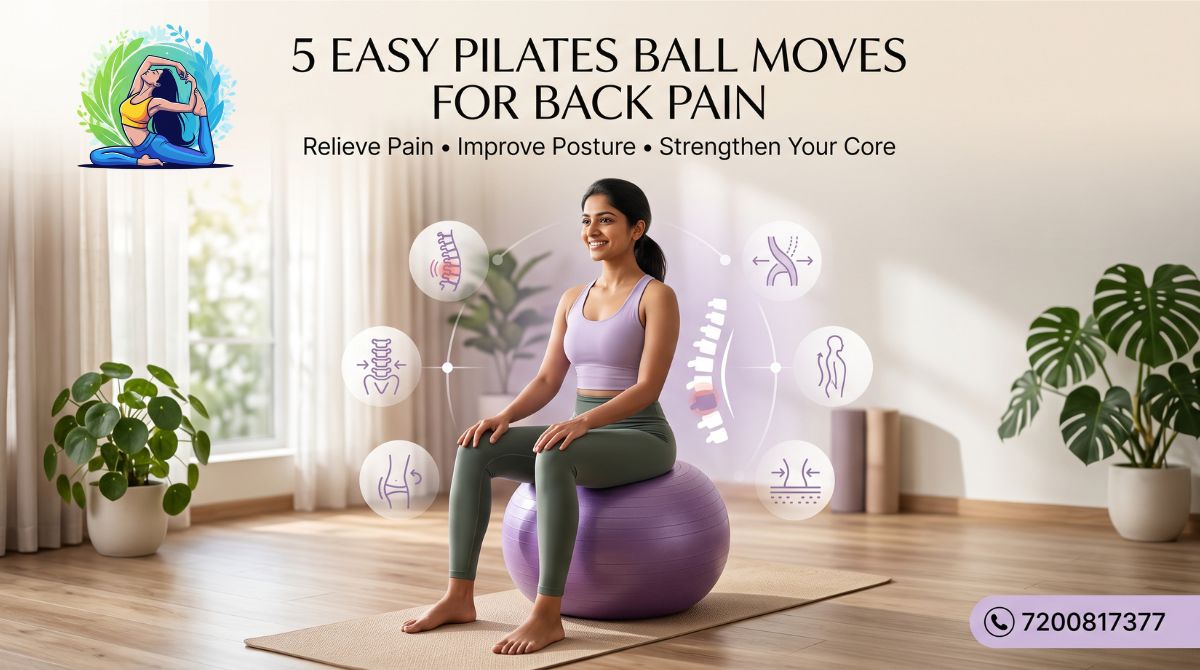
Back pain is one of the most common health concerns among women today. Long hours of sitting, poor posture, household chores, lifting children, and lack of physical activity can all contribute to discomfort in the lower and upper back. Fortunately, Pilates Ball Moves for Back Pain offer a gentle and effective way to improve mobility, strengthen supporting muscles, and reduce discomfort over time.
A Pilates ball, also known as a stability ball or exercise ball, is an excellent tool for low-impact fitness. Incorporating Pilates Ball Moves for Back Pain into your regular workout routine can help improve balance, posture, flexibility, and core strength while placing minimal stress on your joints. In this guide, you’ll discover 5 easy Pilates ball moves for back pain that are beginner-friendly, easy to perform at home, and designed to help support a healthier, stronger back.
Why Use a Pilates Ball for Back Pain?
A Pilates ball creates an unstable surface that gently activates your core muscles. A stronger core provides better support for your spine, helping improve posture and reduce strain on your back.
Benefits of Pilates Ball Exercises
- Improves posture
- Strengthens core muscles
- Supports spinal alignment
- Increases flexibility
- Reduces muscle stiffness
- Improves balance and stability
- Low-impact and beginner-friendly
1. Pilates Ball Pelvic Tilt
This simple movement helps improve spinal mobility and gently activates the abdominal muscles.
How to Do It
- Sit on the Pilates ball with feet flat on the floor.
- Keep your back straight.
- Slowly tilt your pelvis forward and backward.
- Perform smooth, controlled movements.
Repetitions: 12–15 reps
Benefits
- Improves pelvic mobility
- Reduces lower back stiffness
- Activates deep core muscles
2. Wall Squat with Pilates Ball
This exercise strengthens the legs while supporting the lower back.
How to Do It
- Place the Pilates ball between your lower back and a wall.
- Stand with feet shoulder-width apart.
- Slowly bend your knees into a squat.
- Return to the starting position.
Repetitions: 10–15 reps
Benefits
- Strengthens legs and glutes
- Supports proper posture
- Reduces pressure on the spine
3. Pilates Ball Bridge
The bridge strengthens the hips, glutes, hamstrings, and core.
How to Do It
- Lie on your back.
- Place both feet on the Pilates ball.
- Lift your hips slowly.
- Hold for 2–3 seconds.
- Lower with control.
Repetitions: 10–12 reps
Benefits
- Strengthens the lower back
- Improves core stability
- Supports spinal alignment
4. Back Extension on the Pilates Ball
This gentle exercise strengthens the muscles that support the spine.
How to Do It
- Lie face down over the Pilates ball.
- Keep your feet firmly on the floor.
- Place your hands lightly behind your head.
- Lift your chest slightly.
- Lower slowly.
Repetitions: 8–10 reps
Benefits
- Strengthens back muscles
- Improves posture
- Reduces stiffness
5. Child’s Stretch with Pilates Ball
A relaxing stretch that helps release tension in the back.
How to Do It
- Kneel on a yoga mat.
- Place both hands on the Pilates ball.
- Roll the ball forward while lowering your chest.
- Hold for 20–30 seconds.
Benefits
- Stretches the spine
- Relieves back tension
- Improves flexibility
Sample 15-Minute Pilates Ball Routine
Warm-Up (3 Minutes)
- Shoulder rolls
- Neck stretches
- Gentle walking
Workout (10 Minutes)
- Pelvic Tilt – 15 reps
- Wall Squat – 12 reps
- Bridge – 12 reps
- Back Extension – 10 reps
- Child’s Stretch – Hold 30 seconds
Repeat 2 rounds.
Cool Down (2 Minutes)
- Deep breathing
- Gentle stretching
Tips for Safe Pilates Ball Training
- Choose the correct ball size.
- Move slowly and with control.
- Engage your core throughout each exercise.
- Breathe normally.
- Stop if you experience sharp pain.
- Exercise on a non-slip surface.
Common Mistakes to Avoid
- Holding your breath
- Moving too quickly
- Poor posture
- Using the wrong ball size
- Skipping warm-up and cool-down
Who Can Benefit?
These exercises are suitable for:
- Beginners
- Working women
- Homemakers
- Office professionals
- Older adults
- Women with mild back discomfort
If you have severe or persistent back pain, consult a healthcare professional before starting any exercise program.
Final Thoughts
Back pain doesn’t have to limit your daily life. These 5 easy Pilates ball moves for back pain can help strengthen your core, improve posture, increase flexibility, and support a healthier spine.
The key is consistency. Practicing these gentle exercises a few times each week, along with maintaining good posture and an active lifestyle, can help you move more comfortably and confidently over time.
About the Author