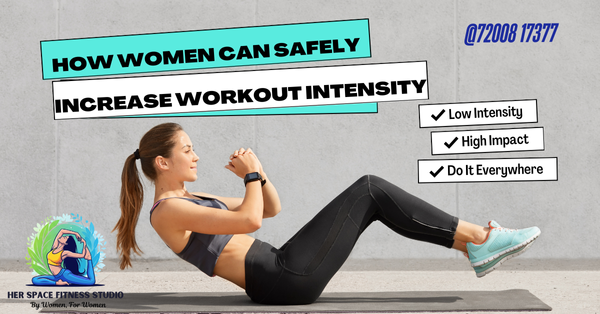
Increasing workout intensity is an effective way for women to build strength, improve endurance, boost metabolism, and achieve fitness goals faster. However, doing it incorrectly can lead to injuries, hormonal imbalance, burnout, or long-term setbacks. This article explains safe, science-backed methods for women to progressively increase workout intensity while protecting their health.
Understanding Workout Intensity
Workout intensity refers to how hard your body is working during exercise. It can be increased by:
- Lifting heavier weights
- Doing more repetitions or sets
- Increasing speed or resistance
- Reducing rest time
- Adding advanced movements
- Safely increase workout intensity
For women, intensity must be increased gradually to support muscle growth, joint health, and hormonal balance.
Why Women Should Increase Intensity Gradually
Women’s bodies respond differently to exercise due to:
- Hormonal fluctuations (menstrual cycle)
- Lower average muscle mass than men
- Higher joint flexibility (which can increase injury risk)
Sudden jumps in intensity can cause:
- Muscle strains and joint pain
- Fatigue and poor recovery
- Missed periods or hormonal disruption
- Mental burnout
Progressive overload is the safest approach.
Safe Ways to Increase Workout Intensity
1. Follow Progressive Overload
Progressive overload means small, consistent increases over time.
Safe methods include:
- Adding 1–2 kg to weights every 1–2 weeks
- Increasing reps from 10 to 12 before adding weight
- Adding one extra set
- Increasing workout time by 5–10 minutes
Avoid increasing everything at once.
2. Strengthen Form Before Increasing Load
Good technique is essential for safety.
Before increasing intensity:
- Master basic movements (squats, lunges, push-ups)
- Keep core engaged and spine neutral
- Control the movement instead of rushing
- Women workout intensity progression
Poor form under high intensity leads to injury.
3. Increase Intensity Using Tempo
Slowing down movements increases difficulty without heavier weights.
Example:
- Lower weights slowly (3–4 seconds)
- Pause briefly at the bottom
- Lift with control
This improves muscle engagement and joint safety.
4. Use Interval Training Carefully
High-Intensity Interval Training (HIIT) is effective but should be used wisely.
Safe tips:
- Limit HIIT to 2–3 times per week
- Include proper warm-up and cool-down
- Avoid doing HIIT on consecutive days
Too much HIIT can increase stress hormones.
5. Sync Workouts With the Menstrual Cycle
Women can train smarter by adjusting intensity:
- Follicular phase (Day 1–14): Best time for strength and high intensity
- Ovulation: Peak energy and power
- Luteal phase (Day 15–28): Reduce intensity, focus on mobility and endurance
Listening to your body improves performance and recovery.
6. Prioritize Recovery and Rest
Recovery is where strength is built.
Key recovery habits:
- 7–9 hours of sleep
- Rest days between intense workouts
- Stretching and mobility work
- Active recovery like walking or yoga
Overtraining can stall progress.
7. Fuel Your Body Properly
Nutrition plays a critical role in intensity progression.
Essential nutrients:
- Protein for muscle repair
- Complex carbs for energy
- Healthy fats for hormones
- Iron and calcium for women’s health
Avoid intense workouts on very low-calorie diets.
8. Strengthen Joints and Stabilizer Muscles
Women are more prone to knee and hip injuries.
Include:
- Glute strengthening exercises
- Core stability workouts
- Balance and unilateral training
This protects joints as intensity increases.
9. Track Progress Without Comparison
Every woman’s fitness journey is different.
Track:
- Strength gains
- Endurance improvement
- Energy levels
- Recovery quality
Avoid comparing progress with others, especially on social media.
10. Listen to Warning Signs
Stop or reduce intensity if you notice:
- Persistent pain
- Extreme fatigue
- Dizziness or nausea
- Sleep disturbances
- Irregular menstrual cycle
Pushing through pain is unsafe.
Mental Approach to Increasing Intensity
Confidence and patience are key.
- Progress is not linear
- Strength takes time
- Consistency matters more than speed
- Avoid injury when increasing workouts
Training smarter is better than training harder.
Conclusion
Women can safely increase workout intensity by following a structured, gradual approach that respects their body’s needs. Prioritizing proper form, recovery, nutrition, and hormonal balance allows for long-term strength, improved fitness, and injury prevention.
Strong is safe when done right.
About the Author