Introduction
Yoga is a simple and accessible form of physical activity that can help women improve flexibility, balance, mobility, strength, and relaxation. You do not need to spend an hour practicing yoga to get started. A consistent 15-minute daily yoga routine for women can be a practical way to introduce movement into a busy lifestyle.
For working women, homemakers, students, and beginners, a short yoga session can fit easily into a morning, lunch break, or evening routine. The key is to start with comfortable movements, focus on breathing, and gradually build consistency.
This guide explains how to start yoga for women with a 15-minute daily plan, including beginner-friendly poses, breathing exercises, and simple tips for building a regular practice.
What Is Yoga?
Yoga is a mind-body practice that combines physical postures, breathing techniques, and mindful movement. Different styles of yoga can vary in intensity, from gentle stretching and relaxation practices to more physically demanding sessions.
Beginners can start with simple poses and gradually learn more movements as their flexibility, balance, and confidence improve.
Benefits of Yoga for Women
Yoga for Women offers a combination of physical movement, breathing exercises, and relaxation techniques that can support overall health and well-being. Regular yoga practice may help improve flexibility, balance, muscle strength, posture, mobility, and relaxation. It can also provide a simple way for women to stay active and manage everyday stress.
Key Benefits of Yoga for Women
- Improves flexibility and mobility
- Supports muscle strength and balance
- Helps improve posture
- Promotes relaxation and stress management
- Supports better body awareness
- Can improve breathing control
- Provides gentle, low-impact physical activity
- Can be adapted for different fitness levels and ages
How to Start Yoga for Women
If you are completely new to yoga, begin with simple poses and avoid forcing your body into difficult positions.
Choose a comfortable, quiet space where you can move freely. A yoga mat can provide a comfortable surface, but beginners can also start with a clean, stable floor.
Wear comfortable clothing and keep your movements slow and controlled.
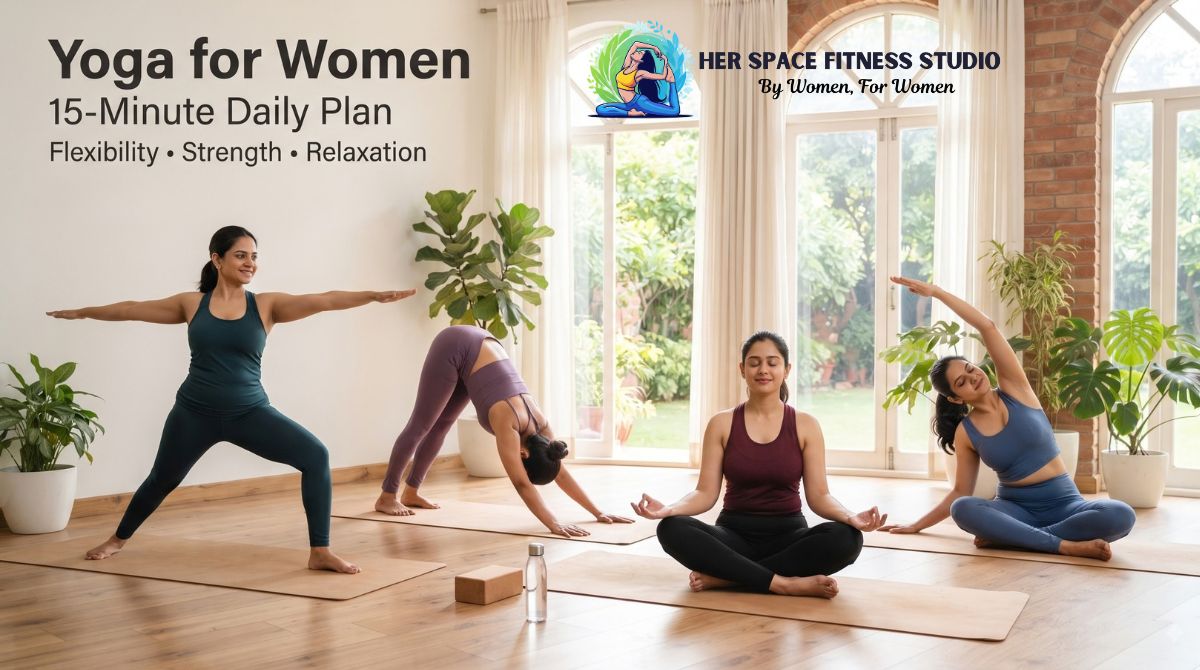
Yoga for Women: 15-Minute Daily Plan
Here is a simple beginner-friendly routine that can be completed in approximately 15 minutes.
Minutes 1–2: Deep Breathing
Begin in a comfortable seated or standing position.
- Relax your shoulders.
- Keep your spine comfortable and upright.
- Breathe slowly through your nose.
- Allow your breathing to become steady.
- Focus your attention on each breath.
Use this time to prepare your body and mind for the practice.
Minutes 3–4: Cat-Cow Stretch
Start on your hands and knees.
- Place your hands under your shoulders.
- Keep your knees under your hips.
- Slowly arch your back while lifting your chest.
- Then gently round your spine.
- Coordinate the movement with your breathing.
Repeat the movement slowly for several cycles.
Minutes 5–6: Child’s Pose
From the hands-and-knees position, move your hips gently toward your heels.
- Extend your arms forward or keep them beside your body.
- Relax your shoulders.
- Breathe slowly.
- Stay in a comfortable position.
Do not force your hips or knees into a position that feels uncomfortable.
Minutes 7–8: Downward-Facing Dog
From a hands-and-knees position, gradually lift your hips upward.
- Keep your hands firmly supported.
- Lengthen your spine.
- Bend your knees slightly if needed.
- Keep your movements controlled.
- Take slow breaths.
Beginners do not need to straighten their legs completely.
Minutes 9–10: Low Lunge
Step one foot forward between your hands and gently lower the back knee toward the floor.
- Keep the front knee comfortable.
- Maintain an upright posture.
- Breathe slowly.
- Switch sides after several breaths.
Use a comfortable range of motion rather than forcing a deep stretch.
Minutes 11–12: Warrior II
Stand with your feet comfortably apart.
- Turn one foot outward.
- Bend the front knee gently.
- Extend your arms in opposite directions.
- Keep your upper body upright.
- Hold for several breaths.
- Repeat on the other side.
Warrior II can help develop lower-body strength, balance, and body awareness.
Minutes 13–14: Seated Forward Stretch
Sit comfortably with your legs extended or slightly bent.
- Keep your spine relaxed.
- Slowly lean forward from your hips.
- Reach toward your legs only as far as comfortable.
- Avoid pulling or forcing the stretch.
- Breathe slowly.
Minute 15: Relaxation
Finish by lying comfortably on your back or sitting quietly.
Close your eyes if comfortable and take several slow breaths.
Allow your body to relax before ending the session.
Sample Weekly 15-Minute Yoga Schedule
You can use the same basic routine throughout the week or gradually introduce different movements.
| Day | 15-Minute Practice |
|---|---|
| Monday | Beginner Yoga + Breathing |
| Tuesday | Flexibility & Mobility |
| Wednesday | Gentle Yoga |
| Thursday | Balance & Strength |
| Friday | Full-Body Yoga |
| Saturday | Stretching & Relaxation |
| Sunday | Gentle Recovery Yoga |
You can also take a rest day if your body needs additional recovery.
Best Time to Practice Yoga
There is no single best time for everyone. Choose a time that fits your daily schedule.
Morning Yoga
A short morning session can help you begin the day with movement and mindfulness.
Evening Yoga
Gentle yoga in the evening can provide a relaxing transition after work or other daily activities.
Lunch Break Yoga
A short session during a break can be a convenient option for women with busy schedules.
The most important factor is choosing a time that you can follow consistently.
Tips for Yoga Beginners
Start Slowly
You do not need to perform advanced poses when starting yoga. Begin with movements that feel comfortable.
Focus on Breathing
Try to coordinate your breathing with your movements. Avoid holding your breath during poses.
Avoid Comparing Yourself With Others
Flexibility and balance differ from person to person. Your practice should be based on your own ability and comfort.
Practice Consistently
Fifteen minutes of regular practice can be more practical than an occasional long session.
Listen to Your Body
Mild stretching sensations can be normal, but sharp or unusual pain is a reason to stop the movement.
Can Yoga Help With Weight Management?
Yoga can contribute to an active lifestyle by improving movement, flexibility, strength, and body awareness. However, yoga alone should not be viewed as a guaranteed weight-loss solution.
Women working toward weight-management goals can combine yoga with regular physical activity, strength training, cardio, balanced nutrition, adequate sleep, and recovery.
Yoga and Women’s Overall Fitness
Yoga can complement other forms of exercise.
For example, a weekly fitness routine could combine:
- Yoga for Women for flexibility and mobility
- Strength training for muscular strength
- Cardio for cardiovascular fitness
- Walking for daily activity
- Rest days for recovery
This type of balanced approach can help women develop a well-rounded fitness routine.
Common Mistakes to Avoid
Forcing Difficult Poses
Never force your body into a position simply because someone else can perform it.
Holding Your Breath
Breathing should remain comfortable and steady during your practice.
Skipping Warm-Up Movements
Gentle movements at the beginning can help prepare your body for the session.
Practicing Through Pain
Stop any movement that causes sharp or unusual pain.
Expecting Immediate Results
Flexibility, balance, strength, and comfort with yoga can improve gradually with consistent practice.
Safety Tips for Women Starting Yoga
Beginners should choose movements appropriate for their current fitness and mobility levels.
If you are pregnant, recently postpartum, recovering from an injury, have a medical condition, or are unsure whether a particular yoga pose is suitable for you, consult an appropriate healthcare professional or qualified yoga instructor before starting.
Use controlled movements and avoid pushing beyond your comfortable range of motion.
Final Thoughts
Learning how to start yoga for women with a 15-minute daily plan does not have to be complicated. A short routine that includes breathing, gentle stretching, beginner-friendly poses, balance work, and relaxation can be a practical starting point.
The goal is not to perform advanced poses immediately. Start where you are, practice consistently, listen to your body, and gradually develop your yoga practice.
A simple 15-minute routine can become a sustainable part of a woman’s daily fitness and wellness routine.
About the Author