Introduction
Cardio exercise is an important part of a healthy and active lifestyle, but not every woman enjoys high-impact workouts such as running, jumping, or intense aerobic exercises. For women who want an effective workout that is easier on the joints, low-impact cardio workouts can be an excellent option.
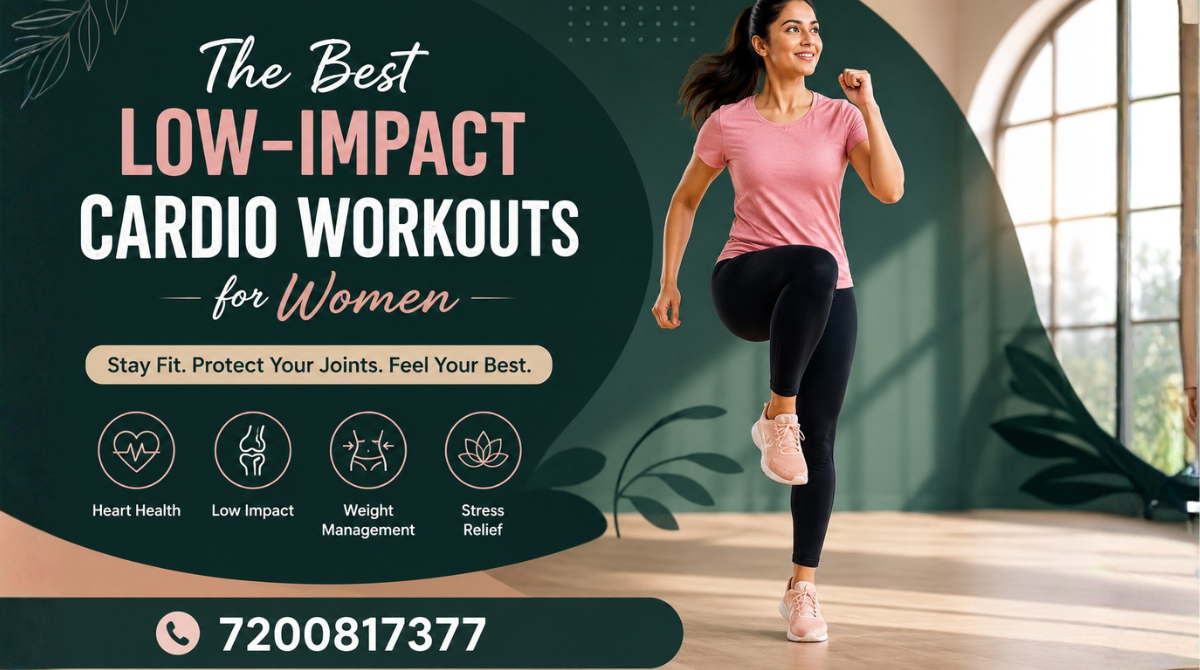
The Best Low-Impact Cardio Workouts for Women increases your heart rate and helps improve cardiovascular fitness while reducing stress on the knees, ankles, hips, and other joints. These workouts can be suitable for beginners, women returning to exercise, busy professionals, and those who simply prefer gentler forms of movement.
Whether you work out at home, in a fitness studio, or outdoors, there are many ways to include The Best Low-Impact Cardio Workouts for Women in your routine.
What Are Low-Impact Cardio Workouts?
Low-impact cardio exercises are movements that increase your heart rate without placing excessive impact or repeated stress on your joints.
Unlike running or jumping, low-impact exercises generally keep at least one foot in contact with the floor. This makes them easier to control and can provide a comfortable way to improve fitness.
Popular examples include:
- Brisk walking
- Indoor cycling
- Low-impact aerobics
- Step-touch exercises
- Marching in place
- Swimming
- Elliptical training
- Dancing without jumps
- Low-impact HIIT
- Walking workouts
Low-impact does not necessarily mean low-intensity. You can still increase your heart rate and create a challenging workout by increasing your pace, resistance, duration, or movement range.
Why Women Can Benefit From Low-Impact Cardio
Regular cardio exercise can support several aspects of overall fitness and wellbeing.
1. Supports Cardiovascular Fitness
Low-impact cardio gets your heart and lungs working. Over time, regular aerobic activity can help improve endurance and make everyday activities feel easier.
2. Helps With Weight Management
Cardio increases energy expenditure and can complement a balanced diet and strength-training routine. Consistency is more important than choosing the most intense workout.
3. Easier on the Joints
Because low-impact exercises minimize repetitive jumping and landing, they can be a more comfortable choice for women who prefer to reduce joint stress.
4. Improves Stamina
Starting with manageable cardio sessions and gradually increasing duration can help build endurance.
5. Can Support Stress Management
Physical activity can be a useful part of a healthy stress-management routine. A brisk walk, cycling session, or dance workout can provide an opportunity to move, reset, and refresh.
6. Suitable for Different Fitness Levels
Many low-impact exercises can be modified for beginners or made more challenging for women with higher fitness levels.
10 Best Low-Impact Cardio Workouts for Women
1. Brisk Walking
Walking is one of the simplest forms of cardio and requires very little equipment.
You can walk outdoors, on a treadmill, or around your home or workplace. To make a regular walk more challenging, gradually increase your pace or include gentle inclines.
Try this:
Walk at a comfortable pace for 5 minutes, followed by 15–25 minutes of brisk walking.
2. Marching in Place
Marching in place is a convenient home workout that can raise your heart rate without jumping.
Stand tall and alternate lifting your knees while moving your arms naturally. Start slowly and increase your pace as you become comfortable.
Beginner option: Keep the knee lift low.
More challenging option: Increase the pace and lift your knees higher.
3. Step-Touch Cardio
Step-touch is a simple low-impact movement often used in aerobic workouts.
Step to one side and bring the other foot toward it. Alternate sides while moving your arms.
You can turn this simple movement into a longer cardio routine by combining it with arm movements, knee lifts, and other low-impact exercises.
4. Indoor Cycling
Cycling is an excellent low-impact cardio option because the pedals support your body while you exercise.
An indoor cycling bike can be used at home or in a fitness studio. You can adjust resistance according to your fitness level.
Cycling can be especially useful when you want a cardio workout without repeated impact from running or jumping.
5. Swimming
Swimming provides a full-body workout while placing very little impact on the joints.
Different swimming strokes can be used to vary the intensity. Even gentle water-based exercise can be a good way to stay active.
If you are new to swimming, start with shorter sessions and gradually increase your time in the water.
6. Elliptical Training
The elliptical machine provides a cardio workout with a smooth movement pattern and minimal impact compared with running.
It can also engage both the upper and lower body when the machine includes moving handles.
Start with a comfortable resistance and gradually increase the intensity as your endurance improves.
7. Low-Impact Dance Workouts
You don’t need to jump to enjoy a fun dance cardio session.
Choose dance movements that keep one foot on the floor and avoid repeated jumps. You can combine side steps, knee lifts, arm movements, and simple dance combinations.
This can make cardio feel less repetitive and more enjoyable.
8. Low-Impact HIIT
High-intensity interval training does not always have to involve jumping.
A low-impact HIIT workout can alternate between periods of faster movement and recovery.
For example:
- 40 seconds marching quickly
- 20 seconds slow marching
- 40 seconds step-touch
- 20 seconds recovery
- 40 seconds knee lifts
- 20 seconds recovery
Repeat the sequence according to your fitness level.
9. Stair or Step Walking
Using stairs or a low step can increase the intensity of a cardio workout.
Instead of jumping onto the step, simply step up and down in a controlled manner.
Start with a low step and focus on maintaining good balance and posture.
10. Low-Impact Aerobics
Low-impact aerobic workouts combine different movements to create a continuous cardio session.
A routine might include:
- Marching
- Side steps
- Knee lifts
- Heel taps
- Step-touch
- Arm movements
- Controlled squats
The movements can be adapted according to your fitness level.
Sample 30-Minute Low-Impact Cardio Workout
If you are looking for a simple routine, try this structure:
Warm-Up – 5 Minutes
- Easy marching – 2 minutes
- Shoulder rolls – 30 seconds
- Side steps – 1 minute
- Gentle knee lifts – 1 minute
- Arm movements – 30 seconds
Main Workout – 20 Minutes
Perform each movement for 2 minutes:
- Brisk marching
- Step-touch
- Knee lifts
- Side-to-side walking
- Low-impact dance
- Fast marching
- Heel taps
- Step-ups
- Side steps with arm movements
- Easy cardio combination
Cool-Down – 5 Minutes
Slow your movements gradually and finish with gentle stretching.
Remember that the workout duration and intensity should match your current fitness level.
How to Make Low-Impact Cardio More Effective
Low-impact does not mean you have to keep your workout easy. Once your body adapts, you can gradually increase the challenge.
Increase Your Speed
Move slightly faster while maintaining control and proper form.
Add Resistance
For cycling or elliptical workouts, gradually increase resistance.
Increase Workout Duration
If you currently exercise for 15 minutes, gradually work toward longer sessions as your fitness improves.
Use Intervals
Alternate between moderate and faster periods instead of exercising at the same pace throughout the workout.
Add Arm Movements
Using your arms actively can increase the overall effort of simple movements such as marching and step-touch.
Combine Cardio With Strength Training
Cardio and strength training complement each other. A balanced routine can include cardio sessions along with exercises that strengthen major muscle groups.
How Often Should Women Do Cardio?
The ideal amount of cardio depends on your fitness level, goals, schedule, and overall health.
For general health, many adults can work toward 150 minutes of moderate-intensity aerobic activity per week, along with muscle-strengthening activities on at least two days per week.
You don’t have to complete all your cardio at once. You can divide your activity into shorter sessions throughout the week.
For example:
- Monday – 30-minute brisk walk
- Tuesday – Strength training
- Wednesday – 30-minute cycling
- Thursday – Rest or gentle movement
- Friday – 30-minute low-impact cardio
- Saturday – Walking or dance workout
- Sunday – Rest or light activity
Consistency is more important than trying to exercise intensely every day.
Low-Impact Cardio for Beginners
If you are new to exercise, start with simple movements and shorter sessions.
A beginner routine could include:
Week 1: 10–15 minutes, 3 days per week
Week 2: 15–20 minutes, 3 days per week
Week 3: 20–25 minutes, 3–4 days per week
Week 4: 25–30 minutes, 4 days per week
You don’t need to follow this exact schedule. Increase activity gradually according to how your body feels.
Common Mistakes to Avoid
Starting Too Fast
Doing too much too soon can make it difficult to maintain a routine. Begin at a manageable level.
Skipping the Warm-Up
A short warm-up prepares your body for exercise and helps you transition into your workout.
Ignoring Technique
Even simple exercises should be performed with controlled movements and good posture.
Exercising Through Pain
Muscle fatigue can be normal, but sharp, severe, or unusual pain should not be ignored. Stop the exercise and seek appropriate professional advice if needed.
Focusing Only on Cardio
Cardio is valuable, but a balanced fitness routine can also include strength training, mobility work, recovery, and adequate nutrition.
How to Stay Consistent With Cardio
Finding an exercise you enjoy can make staying consistent much easier.
Here are some practical tips:
- Choose workouts you actually enjoy.
- Keep sessions realistic for your schedule.
- Exercise with friends or a group.
- Listen to music or follow an enjoyable workout video.
- Track your weekly activity.
- Set small, achievable goals.
- Don’t feel pressured to exercise perfectly every day.
- Take rest days when needed.
For busy women, even a short workout can be a useful step toward maintaining an active lifestyle.
Low-Impact Cardio vs High-Impact Cardio
| Low-Impact Cardio | High-Impact Cardio |
|---|---|
| Lower impact on joints | Greater impact on joints |
| Usually keeps one foot on the floor | Often includes jumping or running |
| Beginner-friendly options | Can require more conditioning |
| Walking, cycling, swimming | Running, jumping, jump squats |
| Can be modified easily | May require more careful progression |
Neither type is automatically better. The best workout is one that matches your fitness level, preferences, goals, and physical needs.
Safety Tips for Women
Before starting a new exercise routine, consider your current fitness level and any physical limitations.
Keep these points in mind:
- Start gradually.
- Wear comfortable, supportive footwear when appropriate.
- Stay hydrated.
- Use proper exercise technique.
- Give your body time to recover.
- Stop if you experience significant pain, dizziness, or unusual symptoms.
- If you have a medical condition, recent injury, or specific exercise concerns, speak with a qualified healthcare professional before beginning a new program.
Final Thoughts
Low-impact cardio workouts for women offer a practical way to improve cardiovascular fitness while keeping exercise accessible and adaptable. From brisk walking, low-impact dance, marching, and step exercises, there are plenty of options to choose from.
The goal isn’t to find the hardest workout. It’s to find a form of movement that you can perform safely, enjoy consistently, and gradually improve over time.
For women with busy schedules, even a 20–30 minute The Best Low-Impact Cardio Workouts for Women session can be a valuable addition to a balanced fitness routine. Combine regular cardio with strength training, nutritious meals, adequate recovery, and healthy lifestyle habits for a well-rounded approach to fitness.
Start where you are, move consistently, and progress at your own pace.
About the Author