
Introduction
When it comes to fat loss, one question that often comes up is: Should I choose HIIT or steady cardio? Both forms of exercise are effective for improving fitness and supporting weight management, but they work in different ways.
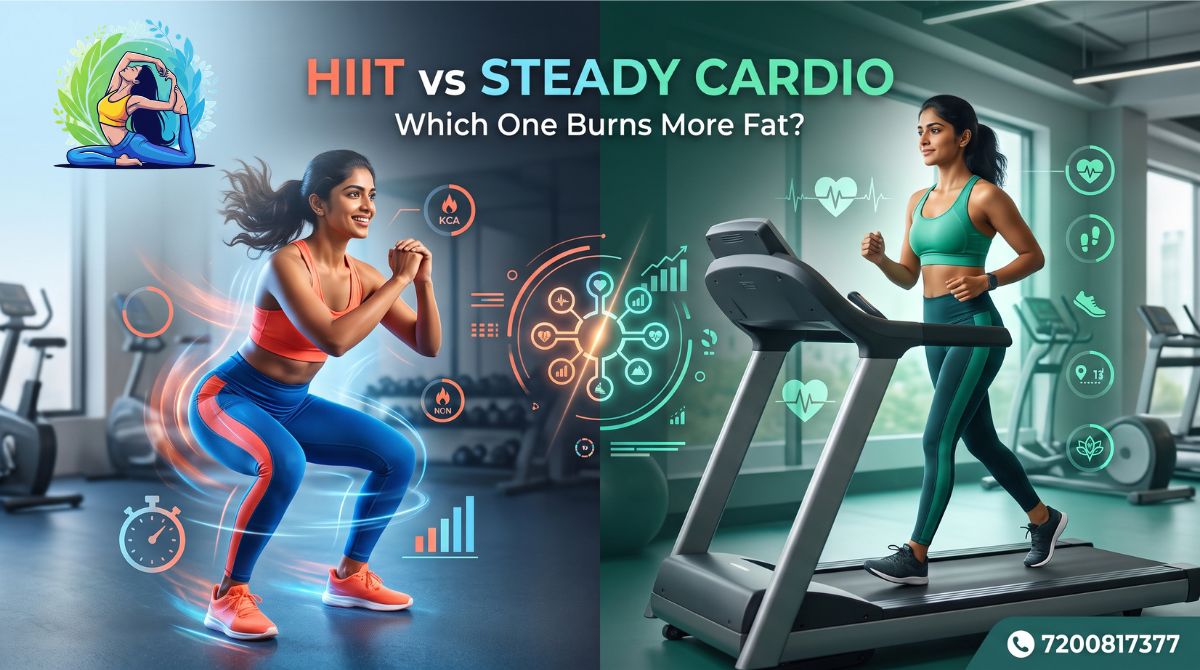
HIIT (High-Intensity Interval Training) involves short bursts of intense activity followed by brief recovery periods, while HIIT vs Steady Cardio is performed at a consistent, moderate pace for a longer duration.
If your goal is to burn fat, improve fitness, and make the most of your workout time, understanding the differences between these two training styles can help you choose the right one for your needs.
What Is HIIT?
High-Intensity Interval Training (HIIT) alternates between periods of intense exercise and short recovery breaks.
A typical HIIT workout may include:
- 30 seconds of fast-paced exercise
- 30–60 seconds of recovery
- Repeat for 15–25 minutes
Examples include:
- Jump squats
- High knees
- Mountain climbers
- Burpees
- Fast cycling
- Sprint intervals
HIIT workouts are shorter but more intense.
What Is Steady Cardio?
Steady cardio involves exercising continuously at a moderate intensity without frequent breaks.
Examples include:
- Brisk walking
- Jogging
- Cycling
- Swimming
- Elliptical training
- Dance cardio
Most steady cardio sessions last between 30 and 60 minutes.
HIIT vs Steady Cardio: Key Differences
| HIIT | Steady Cardio |
|---|---|
| Short workouts (15–25 min) | Longer workouts (30–60 min) |
| High intensity | Moderate intensity |
| Burns many calories in less time | Burns calories steadily |
| Boosts metabolism after exercise | Easier to sustain for longer periods |
| Improves power and endurance | Improves cardiovascular endurance |
Which One Burns More Fat?
Both HIIT and steady cardio can support fat loss when combined with a balanced diet and consistent exercise routine.
HIIT
HIIT often burns more calories in less time because of its higher intensity. It may also increase calorie burn after your workout due to excess post-exercise oxygen consumption (EPOC), sometimes called the “afterburn effect.”
Steady Cardio
Steady cardio burns calories during the workout and is a great option for improving endurance and maintaining an active lifestyle. Longer sessions can contribute significantly to overall calorie expenditure.
The most effective choice depends on your fitness level, preferences, health status, and ability to stay consistent.
Benefits of HIIT
HIIT offers several advantages:
- Time-efficient workouts
- Improves cardiovascular fitness
- Supports healthy weight management
- Builds endurance
- Increases metabolism
- Adds workout variety
HIIT is ideal for people with limited time who enjoy higher-intensity exercise.
Benefits of Steady Cardio
Steady cardio remains one of the most popular forms of exercise because it:
- Is beginner-friendly
- Improves heart health
- Builds stamina
- Is easier on the joints (depending on activity)
- Helps relieve stress
- Can be sustained for longer periods
Walking is one of the easiest and most accessible forms of steady cardio.
Which Is Better for Beginners?
Beginners often find HIIT vs Steady Cardio easier because it allows the body to gradually adapt to regular exercise.
Once a good fitness foundation has been built, short HIIT sessions can be introduced under proper guidance.
Starting slowly helps reduce injury risk and improves long-term consistency.
Can You Combine Both?
Absolutely.
Many fitness professionals recommend combining HIIT and steady cardio throughout the week.
Example weekly plan:
- Monday – Strength Training
- Tuesday – Steady Cardio
- Wednesday – HIIT
- Thursday – Yoga or Recovery
- Friday – Strength Training
- Saturday – Steady Cardio
- Sunday – Rest
A balanced routine supports overall fitness, heart health, and sustainable fat loss.
Tips for Better Fat Loss
No matter which workout you choose:
- Stay consistent
- Eat a balanced, nutritious diet
- Get enough sleep
- Stay hydrated
- Include strength training
- Manage stress
- Track your progress
Healthy lifestyle habits play a bigger role in fat loss than any single workout.
Common Mistakes to Avoid
Avoid these common mistakes:
- Doing HIIT every day without recovery
- Ignoring strength training
- Relying only on cardio for fat loss
- Skipping warm-ups and cool-downs
- Expecting instant results
Sustainable progress comes from consistency, not extremes.
Final Thoughts
When comparing HIIT vs Steady Cardio, there isn’t a single winner for everyone. HIIT is excellent for those who want shorter, high-intensity workouts, while steady cardio is perfect for beginners and anyone who enjoys longer, moderate-paced exercise.
For the best long-term results, combine both styles with strength training, healthy nutrition, and adequate recovery. The workout you enjoy and can stick with consistently is the one that will help you achieve lasting fat-loss and fitness success.
About the Author