For many women, exercise feels like a punishment rather than a form of care. It’s often tied to weight loss, guilt, or unrealistic body standards. Over time, this mindset can drain motivation and joy.
The truth is—exercise is meant to support your life, not control it.
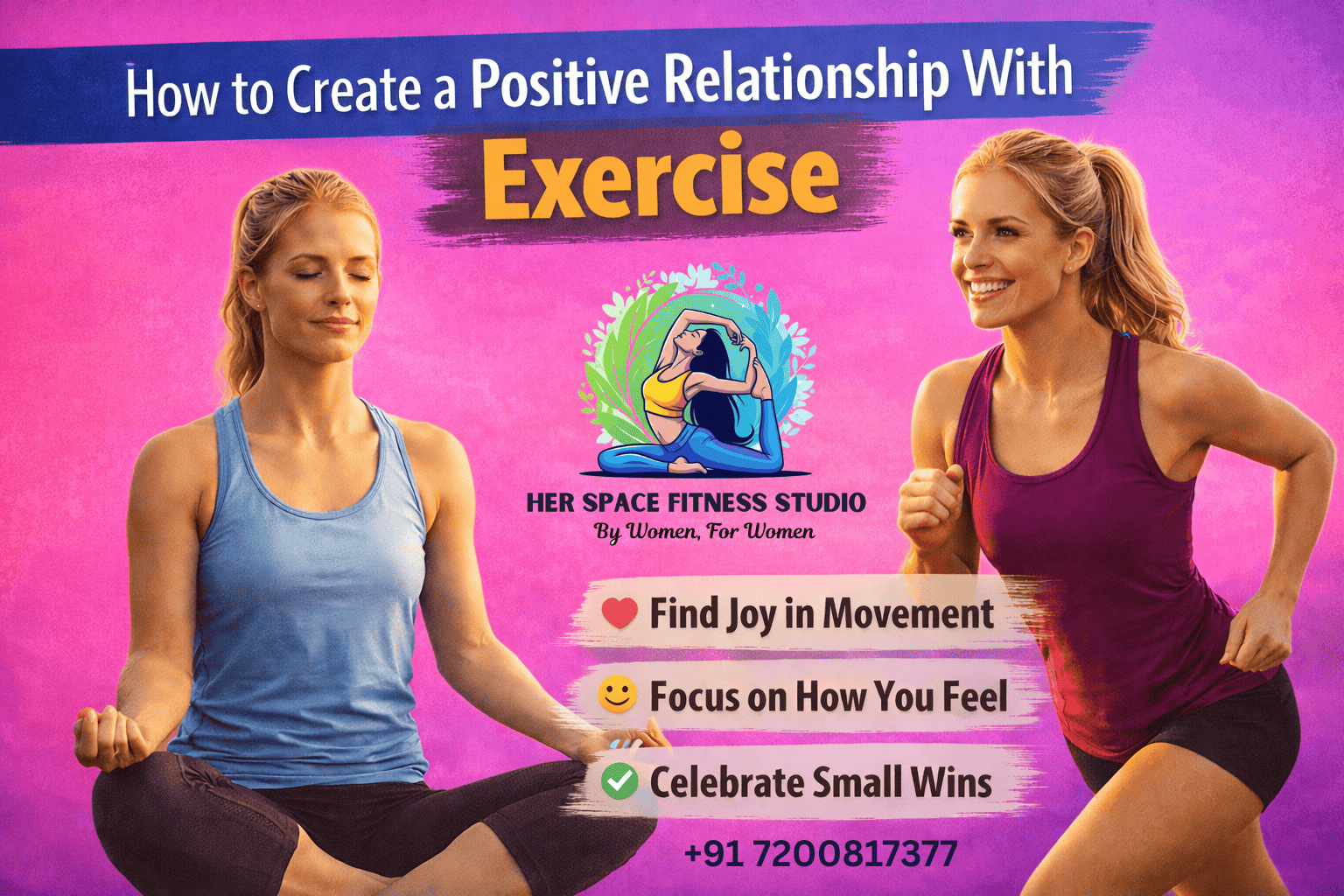
Creating a positive relationship with exercise means shifting how you think, feel, and approach movement. When fitness becomes about energy, strength, and mental peace, consistency follows naturally.
1. Change the Purpose of Exercise
If your only goal is to “burn calories” or “lose weight fast,” exercise can feel exhausting and discouraging.
Instead, reframe exercise as a way to:
- Increase daily energy
- Women-focused fitness programs
- Reduce stress and anxiety
- Improve sleep quality
- Strengthen muscles and joints
- Support long-term health
When the purpose changes, motivation becomes internal—not forced.
2. Choose Movement You Actually Enjoy
You don’t need to follow every trending workout. The best exercise is the one you’ll happily return to.
Try exploring:
- Walking or light jogging
- Yoga or Pilates
- Strength training
- Dance workouts
- Cycling or swimming
If it feels good during and after, it’s working. Joy is a powerful form of consistency.
3. Let Go of “All or Nothing” Thinking
Many women believe workouts only count if they are intense or long. This mindset leads to burnout.
Remember:
- 10 minutes of movement is better than none
- Gentle workouts still benefit your body
- Rest days are productive, not lazy
Progress comes from showing up regularly, not pushing perfectly.
4. Listen to Your Body, Not Social Media
Your body’s needs change based on:
- Sleep
- Stress levels
- Hormonal cycles
- Work and family responsibilities
Some days you’ll feel strong; other days you’ll need gentleness. Both are valid. Respecting your body builds trust—and a healthier fitness journey.
5. Stop Using Exercise as Punishment
Exercise should never be a way to “undo” eating or “fix” your body.
Avoid thoughts like:
- “I need to work out because I ate too much.”
- “I must burn this off.”
Instead, think:
- “I move because my body deserves care.”
- “Movement helps me feel better.”
This shift creates freedom and self-respect.
6. Focus on How Exercise Makes You Feel
Results aren’t only visible in the mirror.
Notice improvements like:
- Better mood
- Less stiffness
- Improved posture
- Increased confidence
- Mental clarity
These non-scale victories are signs your body is thriving.
7. Create a Supportive Environment
Your surroundings matter more than willpower.
Helpful tips:
- Wear comfortable clothes you love
- Keep workouts simple and accessible
- Fitness without weight loss pressure
- Follow accounts that promote body-positive fitness
- Set realistic routines that fit your lifestyle
A supportive environment makes movement feel welcoming, not intimidating.
8. Allow Your Fitness Journey to Evolve
What works for you now may change later—and that’s okay.
Your exercise routine should adapt to:
- Age
- Health
- Life stages
- Personal goals
There’s no “one right way” to stay active. Flexibility keeps fitness sustainable.
Final Thoughts
A positive relationship with exercise isn’t about discipline—it’s about compassion.
When you stop forcing workouts and start choosing movement that supports your well-being, exercise becomes something you look forward to, not something you avoid.
Move because you love your body.
Not because you’re trying to change it.
About the Author