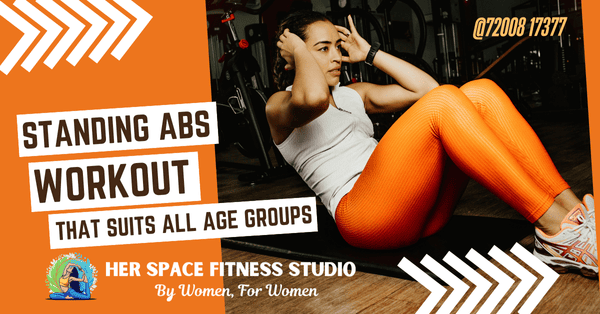
A strong core is important for everyone—children, adults, and older individuals. It supports your spine, improves balance, reduces back pain, and enhances daily activities like walking, bending, lifting, and even sitting upright. The good news? You don’t need to lie on the floor or perform difficult crunches to build core strength. A Standing Abs Workout is safe, effective, and ideal for all age groups.
This article explains the benefits, safety tips, and a complete standing abs routine you can do anytime, anywhere.
Why Standing Abs Workouts Are Good For All Ages
✔ Low impact on joints
No jumping or pressure on knees. Safe for seniors and beginners.
✔ Improves balance & posture
Standing moves activate deeper stabiliser muscles that help you stand tall.
✔ Strengthens the core without strain
Great for people with neck or lower-back issues who find floor exercises difficult.
✔ Functional strength
Helps in daily activities—walking, climbing stairs, lifting groceries.
✔ Beginner-friendly but can be made advanced
Same exercise can be adjusted for children, adults, and older people.
Warm-Up (2 Minutes)
Before starting, loosen your body:
- Shoulder rolls – 20 seconds
- Side-to-side torso turns – 30 seconds
- Marching in place – 1 minute
- Full body standing workout
This increases blood flow and reduces injury risk.
10-Minute Standing Abs Workout (Suitable for All Ages)
Do each exercise for 40 seconds with 20 seconds rest.
1. Standing March with Core Tightening
Lift knees one by one while tightening your stomach muscles.
Benefits: Activates lower abs, improves mobility.
2. Side Bends
Stand tall, slide one hand down the side of your leg, and return to center.
Benefits: Strengthens obliques and improves spine flexibility.
3. Standing Knee-to-Elbow Crunch
Bring your left knee toward your right elbow, then switch.
Benefits: Engages upper abs, lower abs, and obliques all at once.
4. Standing Twist Rotation
Hold arms at chest height and twist slowly side to side.
Benefits: Improves waist mobility, safe for all ages.
5. Leg Lifts to the Front
Lift your leg straight forward while keeping your core tight.
Benefits: Works lower abs and helps with balance.
6. Wood-Chop Motion (Without Weights)
Move hands from above your shoulder diagonally down toward your opposite hip.
Benefits: Strengthens side core muscles and improves coordination.
7. Side Leg Raises
Lift your leg sideways while keeping your torso straight.
Benefits: Strengthens obliques and hips—great for seniors.
8. Standing Pelvic Tilt
Gently tuck your pelvis in and out while standing tall.
Benefits: Excellent for beginners, improves posture and relieves back stiffness.
9. Slow Standing Mountain Climbers
Bring one knee toward the chest while pulling elbows down.
Benefits: Engages full core, gentle cardio for heart health.
10. Overhead Stretch & Hold (Cool Down)
Raise hands overhead, stretch, and breathe deeply.
Benefits: Relaxes muscles and improves lung capacity.
Safety Tips for All Age Groups
For seniors
- Move slowly and avoid jerky motions.
- Support yourself with a chair if needed.
- Stop if you feel dizziness or joint pain.
For adults
- Maintain tight core throughout.
- Increase intensity by adding light dumbbells.
For kids
- Keep movements fun and controlled.
- Avoid weights; use bodyweight only.
How Often Should You Do This?
- Beginners & seniors: 3–4 times per week
- Adults: 4–5 times per week
- Combine with walking, yoga, or light strength training for better results.
Benefits You Will Notice in 2–3 Weeks
- Reduced belly stiffness
- Better balance and posture
- Less back pain
- Stronger, firmer core muscles
- Improved energy levels
- Core strengthening exercises
Final Words
Standing abs workouts are one of the safest and most effective ways to build core strength at any age. You don’t need equipment, space, or experience. Just consistency, controlled movement, and good posture.
About the Author